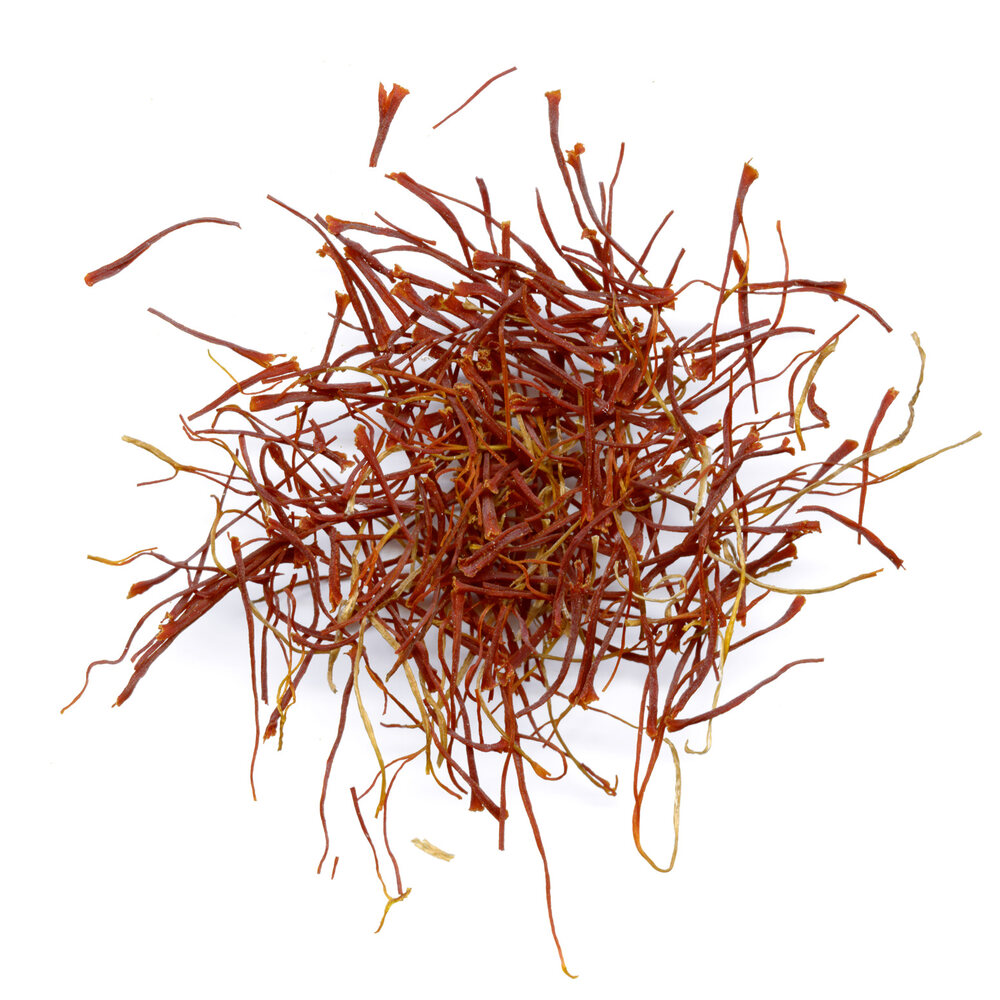
Gram for gram, saffron costs more than silver, so it is no surprise it is so often faked: dyed corn silk, safflower petals, or real threads padded with yellow styles. The good news is that real saffron is easy to recognise once you know what to look for.
Test 1: Warm milk
Drop two or three threads into warm milk. Real saffron releases a golden colour slowly, over 10–15 minutes, and the thread itself stays red. Fake saffron bleeds red or orange almost instantly and the thread turns pale.
Test 2: The rub
Soak a thread for a minute, then rub it between your fingers. Real saffron stays intact and stains your skin yellow. Fakes break apart or leave a red smudge.
Test 3: The aroma
Real Mongra smells sweet, floral and a little like hay. If you smell nothing at all — or something chemical — be suspicious.
What “Grade A1+ Mongra” means
Mongra is the deep-red top of the stigma only, with no yellow style attached. It is the strongest part for colour and aroma, so you need very little: four to six threads flavour a full glass of kesar milk. Our Mongra Saffron (1 g) comes from Pampore, and the 2 g gift vial is our most-gifted item at Diwali.